Perspective is everything, which is a good reason to travel. Nothing resets perspective like seeing the world from another culture’s eyes.
Take Alexander the Great.
That is the question.
Every Western child grows up schooled in the feats of one of of (Western) history’s most brilliant military commanders and empire builders, the man who spread Greek culture across three continents and inspired future empire builders from Julius Caesar to Napoleon — and all before dying at 33.
Which all sounds pretty impressive unless you are among those in Central Asia his empire was built on the bones of. Then he’s “Alexander Makedonskiy” (Macedonian) as our Tajik guide called him with a sneer. Alexander the not-so-great Macedonian. The man who laid waste to Samarkand. The commander who obliterated ancient settlements in today’s Uzbekistan and Tajikistan, the killer who butchered or enslaved countless locals and force-fed Hellenism to cultures millennia older than the Greeks.
Great or not so great Alexander? A matter of perspective.
Then there’s a more recent case: Timur the lame — Tamerlane to English speakers. Timur easily gave Alexander’s legacy a run for its money in the mass destruction department as he slashed his way through Iran, Afghanistan, Central Asia, Iraq, Syria, parts of India (where he destroyed Delhi) and west to Turkey and Georgia. His army is estimated to have killed roughly 5% of the world’s population in its time (1370-1405) before he died en route to attacking China.
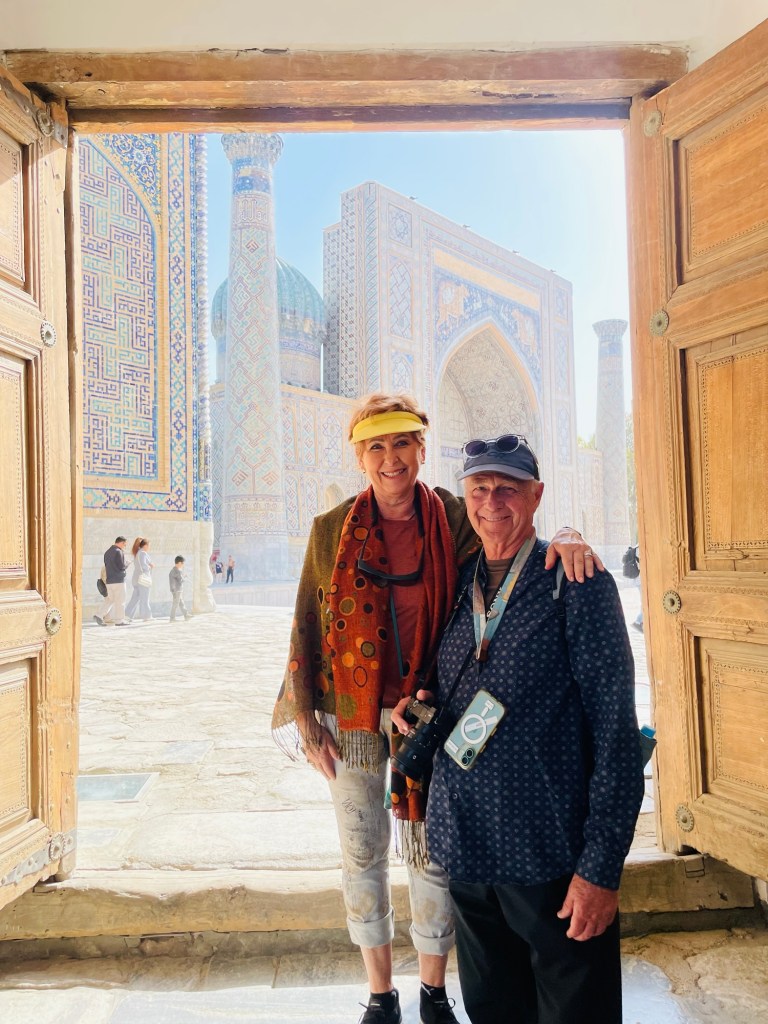
A great-great-grandson-in-law of Genghis Khan (another subject whose glory or infamy rests on whose ox was being bored), Timur was also a free-spending patron of art, architecture and science. His cultural legacy is the heart and soul of Samarkand, which places Timur at the heart and soul of Islamic culture in Central Asia. Nearly all the iconic sights in and around Samarkand are related in some way to Tamarlane.
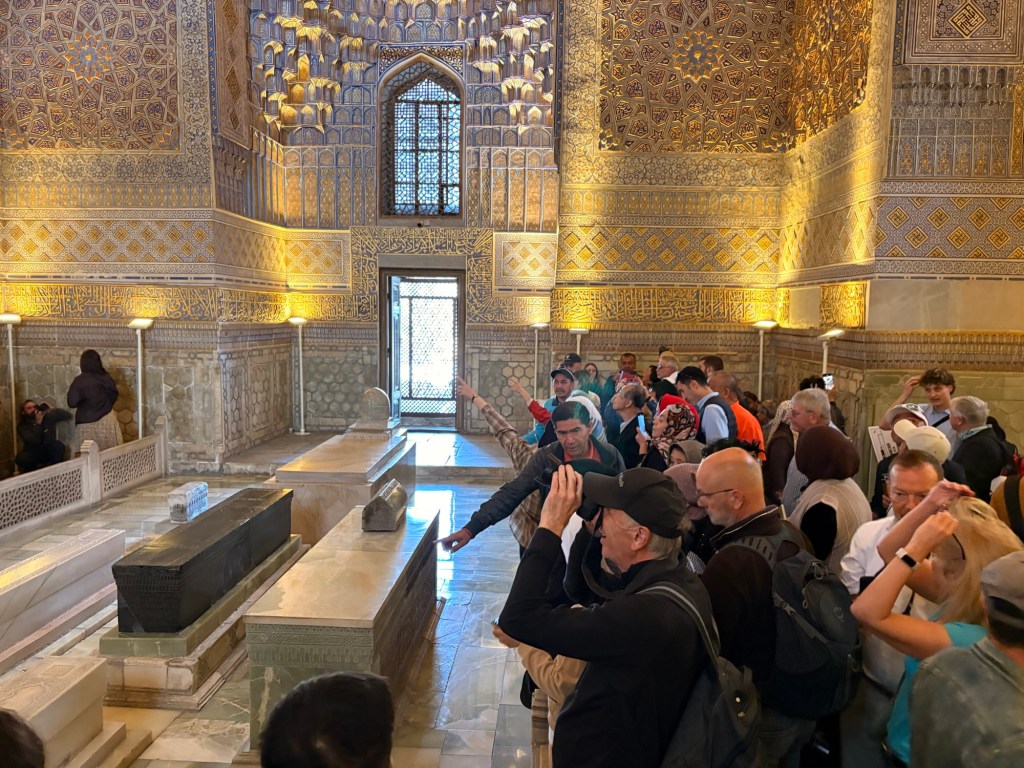
There’s the Gur-e-Amir mausoleum in Samarkand, Uzbekistan, where his body is interred.
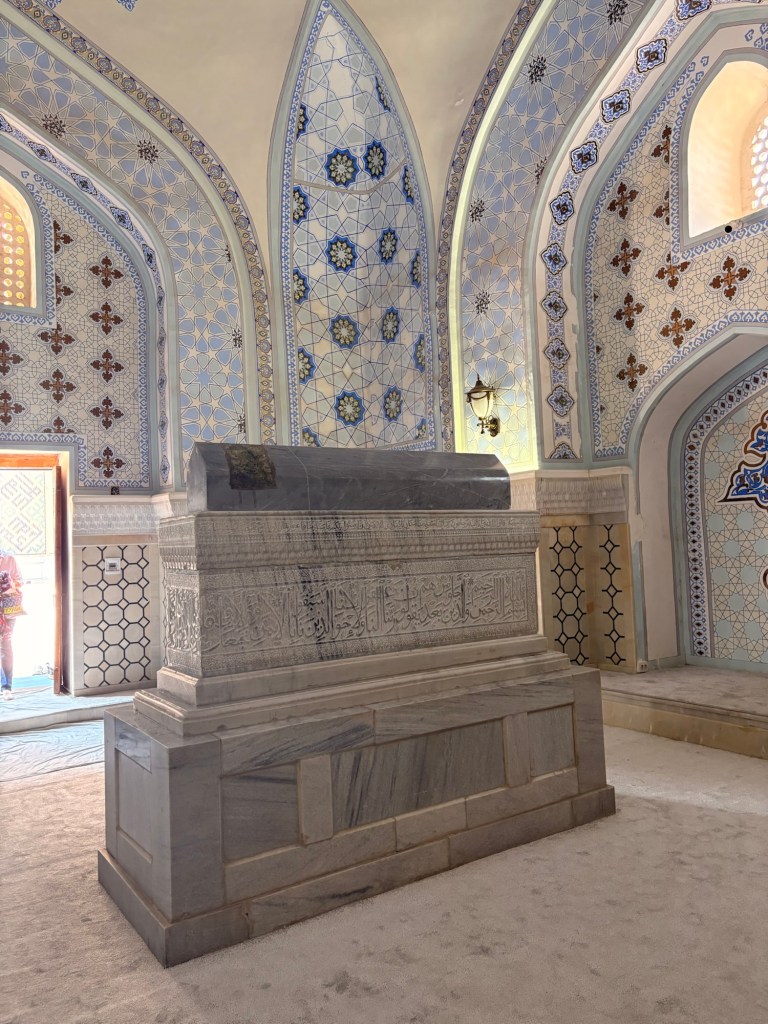
And the empty crypt of Tamerlane in Shahrisabz, where his body was supposed to be entombed but wasn’t.
There’s the Bibi-Khanym mausoleum, where Timur’s devoted and favorite wife was supposed to be interred and maybe was, maybe wasn’t.
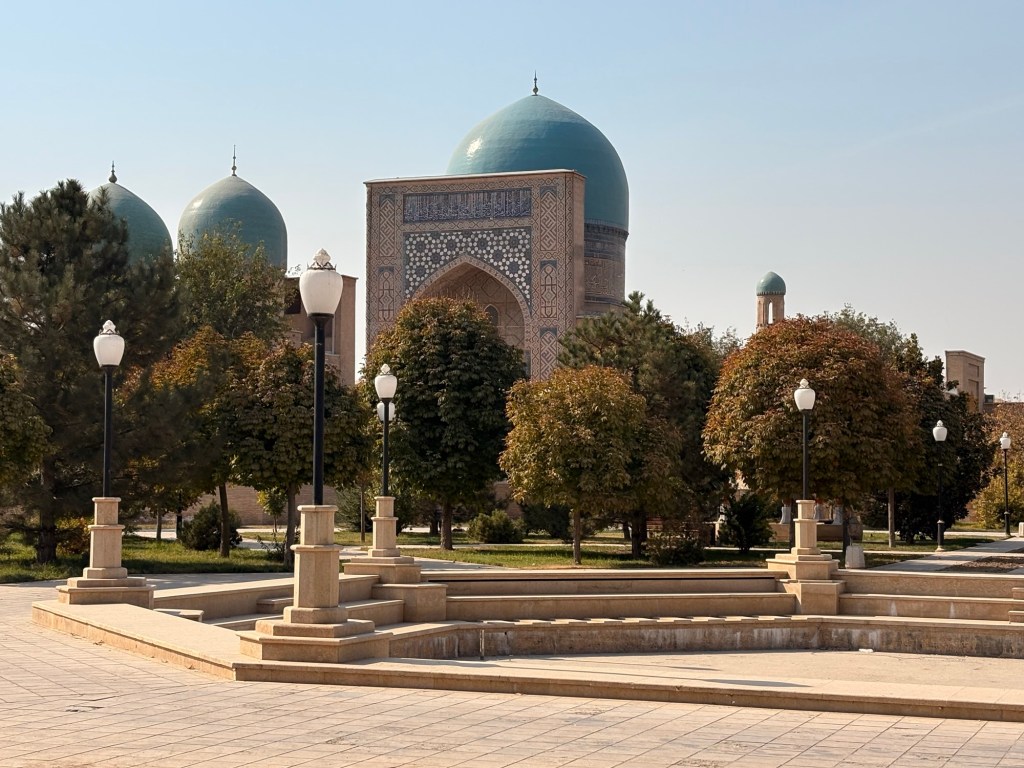
And the Ak-Saray (White Palace) in Shahrisabz, where the emir took time off from the rigors of conquest in his hometown. Perhaps his grandest architectural feat of all, the palace’s front gate was at least 124 feet tall.

Hero or villain for the ages? Or both?
Philosophizing about perspective (different names, same outcomes), our Tajik guide told us, “Britain said we saved you from Russia, Russia said we saved you from Britain. But they’re all the same. This bear will eat you, this wolf will eat you. It does not matter. You are eaten.”

Even more recently, the West tends to view the Soviet era as a disaster for the millions it killed and imprisoned, the cultures it crushed, the environmental catastrophes it wrought, the human rights (at least to Western eyes) it trampled, the economic ruin it sowed and countless other evils.
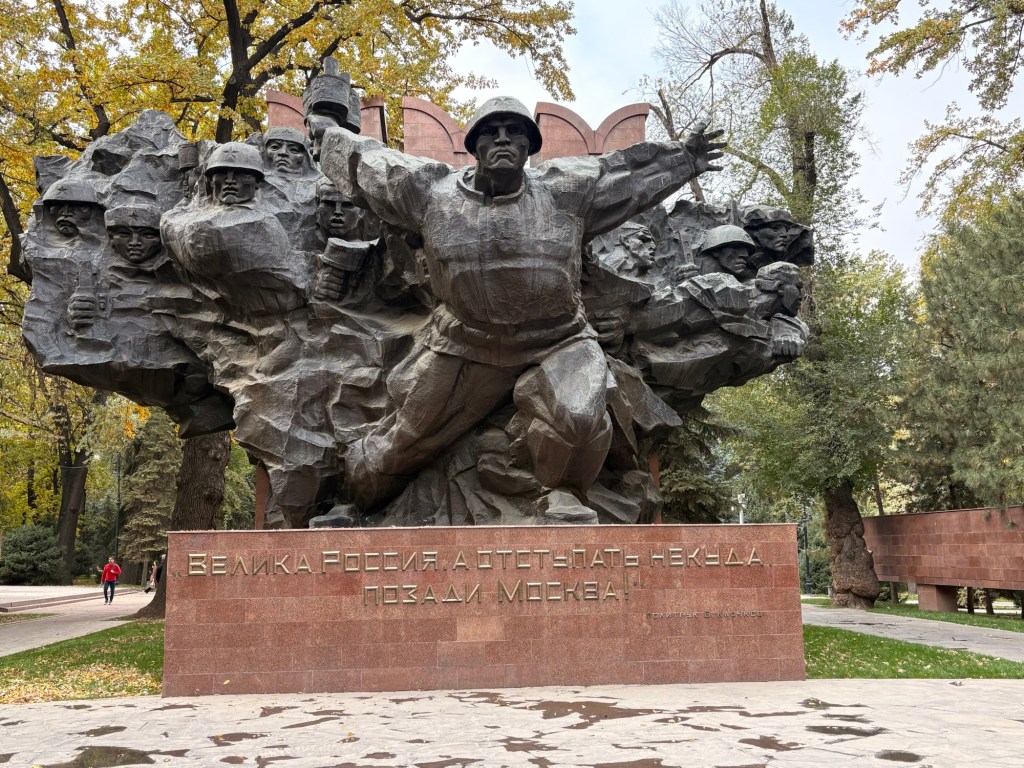
In Almaty, Kazakhstan? There’s a monument to the Bolshevik Revolution in the city’s Monument of Glory.

When we asked our Kazak guide why such a catastrophic event for the people was immortalized by them, he said that, despite the price of communism to the country and its people, many Kazaks liked (and some still like) identifying with an empire. The USSR might be an evil empire in the West but, in the Stans, it made them part of something bigger than themselves.
We don’t buy many souvenirs when we travel. New perspective is the one we always try to bring home.
COMING SOON! Wish Us Luck!

 Partout with Louis & Doris
Thank you for all the wonderful pictures and interesting history and insights!
LikeLike
Yes, travel and getting outside of our own environments is a source of gre
LikeLiked by 1 person
Love the history-cum-architecture (one certainly informs the other). And thank you for taking us to Samarkand, a special place in any era!
LikeLike
Just wait until we share enchanting Bukhara! But first … Turkmenistan!?!
LikeLike
fabulous last line! So true.
LikeLiked by 1 person