With apologies to Monty Python, apart from introducing urban planning, installing infrastructure, laying railroad lines, restoring Angkor Wat, introducing the Latin alphabet in Vietnam, currency in Cambodia, and croissants, coffee and innumerable other essentials throughout the region, what did the French ever do for Indochina?
With further apologies to Monty, apart from appropriating ancient kingdoms, exploiting their resources, looting their ruins, impoverishing their people and imprisoning and torturing anyone with the temerity to fight for their own freedom, what did the French do to Indochina?
History is a messy business. The history of France in Indochina is a case in point.
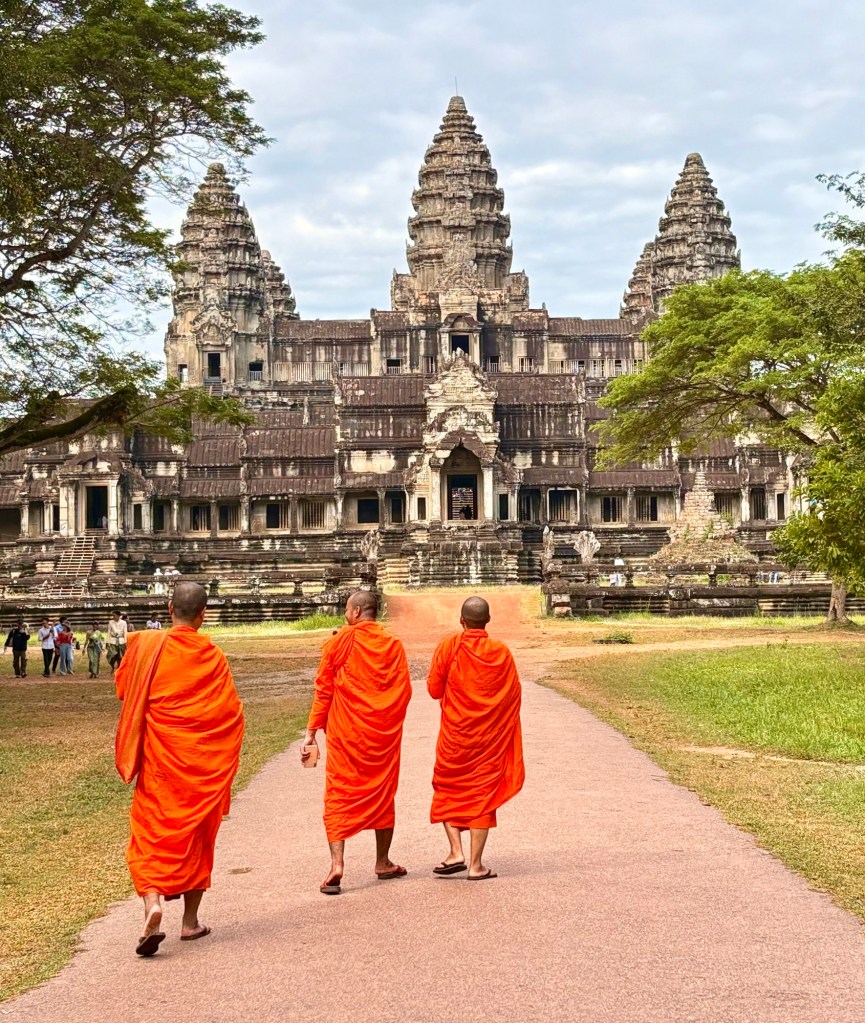
France controlled Indochine – Vietnam, Laos, Cambodia – from 1886 to 1954. As 2025 dawns, the country has been out of power there longer than it was in control. Yet, during a month in the three countries, your Partout pair found it impossible to turn around without catching sight or hearing something that screamed, “France was here!” Or perhaps more accurately, “France is still here!”

We bought baguettes in boulangeries and mailed post cards from La Poste. In Vientiane, we stayed at Le Charme and ate at La Terrace. In Ha Noi, we rendezvoused with a guide at La Place. In Battambang, we rode a bamboo train that runs on rails laid by the French. Louis drank France’s classic pastis everywhere.
It was all quite enchanting but a little confusing, too. What the French did to the land and people of Indochina is at least as significant and lasting as what it did for them, yet the locals seemed just as enamored with their former occupiers as any besotted tourist landing in Paris.
Countless French colonial buildings are exquisitely preserved and still serving their original purpose (plus the secondary one of enchanting tourists).
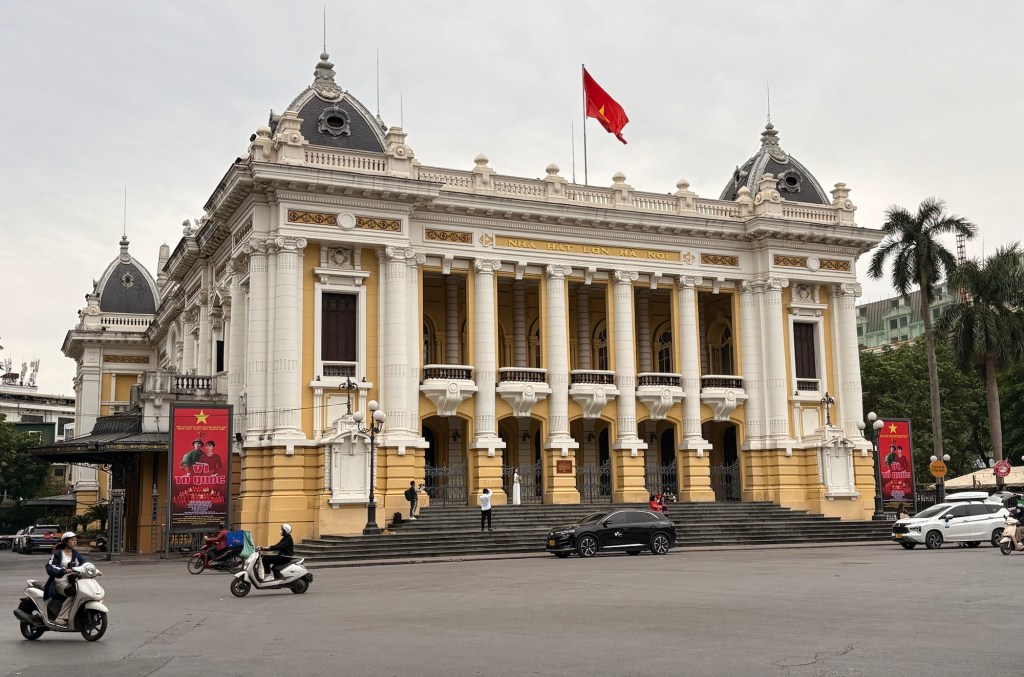
In the orderly “French Quarters,” streets are arranged in grids, boulevards are wide, and sidewalks are actually used for pedestrian traffic instead of for motorcycle parking. A local guide in Ha Noi told us, “Things just work better in the French Quarter.”

Throughout former Indochina, it was vastly easier to find a coffee house than a tea shop. Bakeries with perfect baguettes abounded. One Luang Prabang cafe we visited almost daily prides itself on bringing flour for its croissants and pain au chocolat from Paris itself.

And French is still spoken. More than once, a fumbling English conversation turned into fluent communication because a local who grew up speaking French could answer questions in Louis’s mother tongue.

Mon dieu, there is even a mausoleum for Napoleon Bonaparte (sans cadavre) on the grounds of the Royal Palace of Cambodia.

More than once, we marveled, “We could be in France!” an impression intensified by the fact that Indochina gets more visitors from France these days than from any other single place, or so we were told.
The dark “done to Indochina” side of French colonialism is less visible. We could visit the restorations of Angkor Wat the French have conducted for a century but not the stolen treasures housed in French museums. We could see the preservation of traditional custom, dress and language but not its suppression under French rule.
The dark side was most visible to us at Ha Noi’s Hoa Lo Prison, opened by the French in 1896 and named “Maison Centrale” as if it were a cozy boarding house. (To Americans, this is the “Hanoi Hilton” of the Vietnam War.) Today an official Vietnamese “Historical Relic,” the complex was built to judge, imprison, torture and execute Vietnamese freedom fighters, a purpose it served for more than half a century. Récords were not kept of how many people disappeared behind its walls.

Whatever the score card of French “for” and “to,” any hostility we heard expressed toward invaders and occupiers seemed to be reserved for other nationalities, especially the Chinese (who first invaded the region a couple thousand years ago) and the Japanese (who were responsible for widespread starvation in Vietnam during their WWII occupation). Americans seem to get a pass even though unused ordnance from US bombing missions over Vietnam was routinely dumped on Laos and Cambodia where it is still killing and maiming people and depressing economic growth today.

In this context, maybe it’s not so surprising that the living French legacy of grand boulevards and delicious food outshines any dark past.
Who Knew?!?
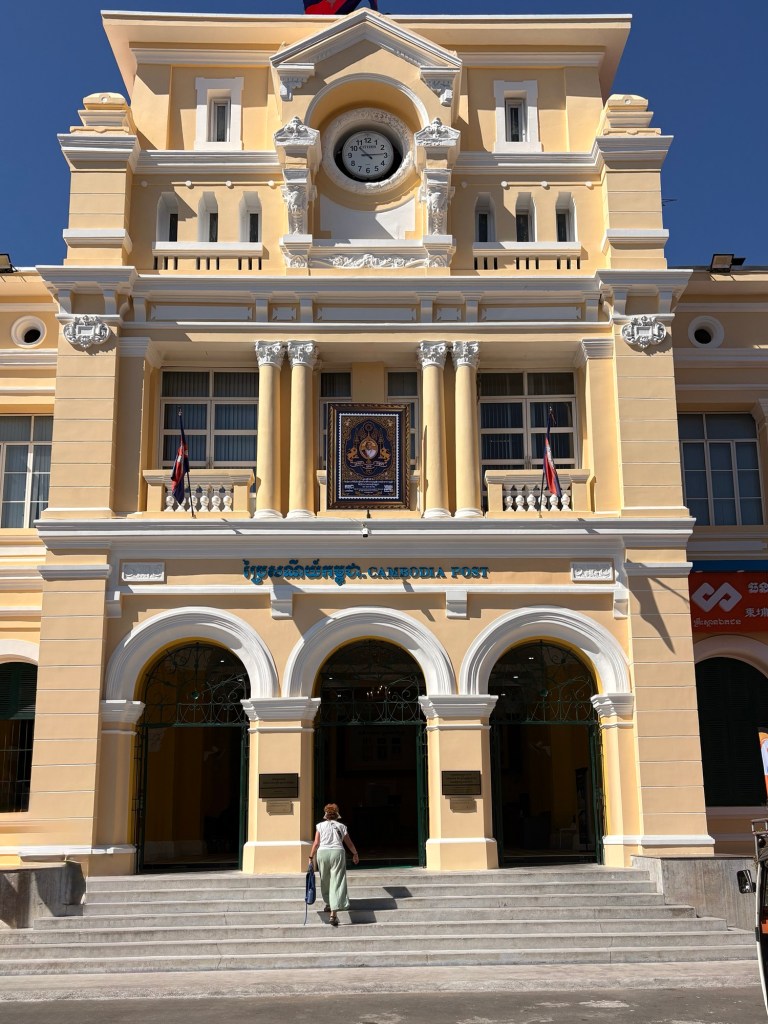
If the architecture of a colonial building doesn’t scream “France was here!” its color will. From the Hoa Lo Prison in Ha Noi to the post office in Phnom Penh and pretty much everywhere in between, the French painted their buidlings yellow, and yellow they remain. A variety of theories for the practice exists, but the most prevalent is that yellow was a symbol of royalty and superiority – just the message for a colonial occupier. Glimpse a yellow building anywhere in Indochina and you’re almost certain to glimpse colonial France.

 Partout with Louis & Doris
Colonization/decolonization has left so many countries hampered. Incredible mindset that some countries felt they could just move into other countries.
LikeLike
Yup. It is a global story and perhaps an eternal one. Who knows? Maybe the Neanderthals were pushed over the brink by colonizing homo sapiens?
LikeLike
Dear Doris and Louis,Thank you for this aga
LikeLike
Another terrific dispatch, Doris and Louis. (Happy New Year to you).
LikeLike