Day 162 – in the North Pacific Ocean – find Insignia on CruiseMapper
“The sixth emperor of the Tang dynasty, Emperor Xuanzong, had a dream while suffering from a high fever.
“In the dream, a small imp (demon) that was causing mischief inside the Imperial Palace was captured with little effort and devoured by a large ogre who seemed to have appeared out of nowhere.

“When Xuanzong asked the ogre who he was, the ogre proclaimed, ‘I am Shoki of Mt. Zhongman. I have come to repay my gratitude to Emperor Gaozu of Tang who courteously interred me.’
“When Xuanzong woke up, he noticed that his ailment had disappeared,” and a legend was born.
Shoki the demon hunter became a mythological figure believed to ward off illness. Though the legend originated in China, Shoki statues can be found protecting homes in Japan today. Partout caught up with him in Aomori, a city on the northernmost bay of Japan’s main island.
The Nebutas of Aomori
In Aomori, Shoki the demon hunter and innumerable of his mythological brethren come fantastically to life every summer during a five-day fire festival featuring parading nebutas – massive, illuminated lantern floats depicting moral lessons from kabuki or Asian mythology. This picture of Doris at the float depicting Shoki’s demon-killing hints at the scale.

On our day in Aomori, we went to see the four of last year’s nebutas. Their existence was prolonged for one year in the city’s Wa-Rasse Nebuta Museum as a way of showcasing their artistry and mythology for students and the public. After their year on display, they will be destroyed, just as the creations they shared the streets with last summer were destroyed at the end of the 2022 festival. Except for historic floats like the one below that are preserved to illustrate how nebutas have evolved, all the floats we saw will be replaced by nebutas of 2023.
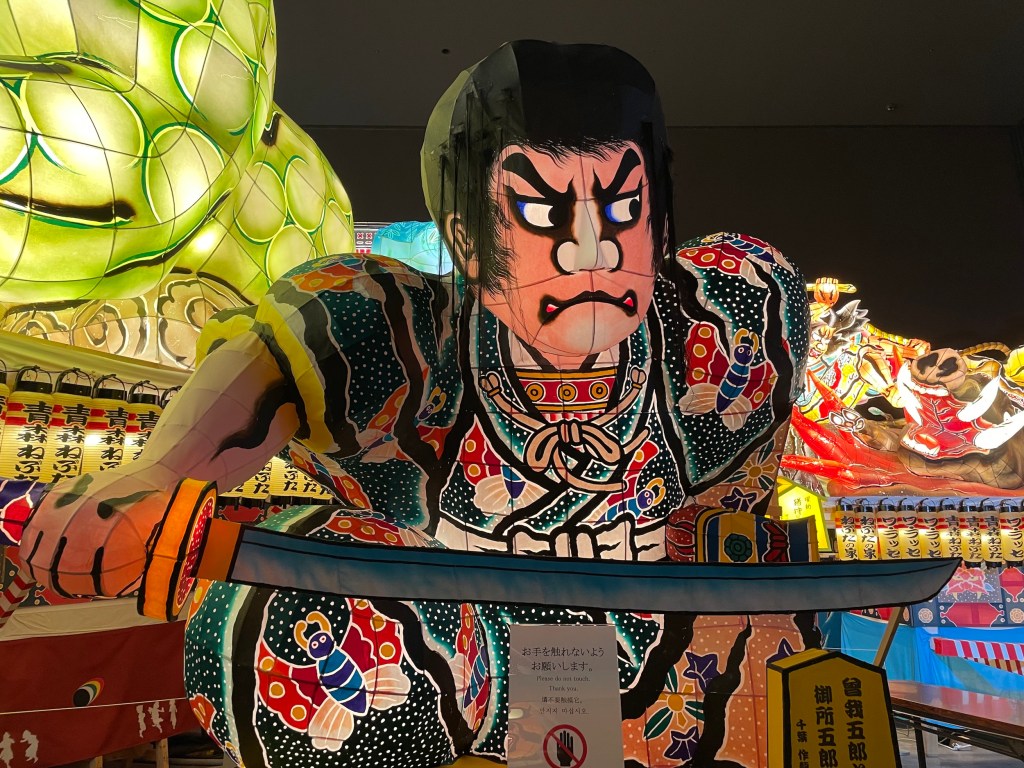
The origins of the nebutas and the festivals (held on a smaller scale throughout Japan in the summer) are obscure but are believed to be rooted in customs designed to ward off the sleep demons that are enemies of summer farm work. Destroying the nebutas after the festival each year completes the ritual of vanquishing the demons.
During their stay in the museum, the multi-ton coated-paper behemoths lit from within by hundreds of light bulbs continue to menace, defend, defeat and enchant those who make their way to a community better known as the snowiest city on earth. There was not a lot of signage to explain them, but photo opps do not get much more bigger and brighter than the ones they present.

The lovely lady among the fish below depicts the Ryukyu creation myth from the island of Okinawa.

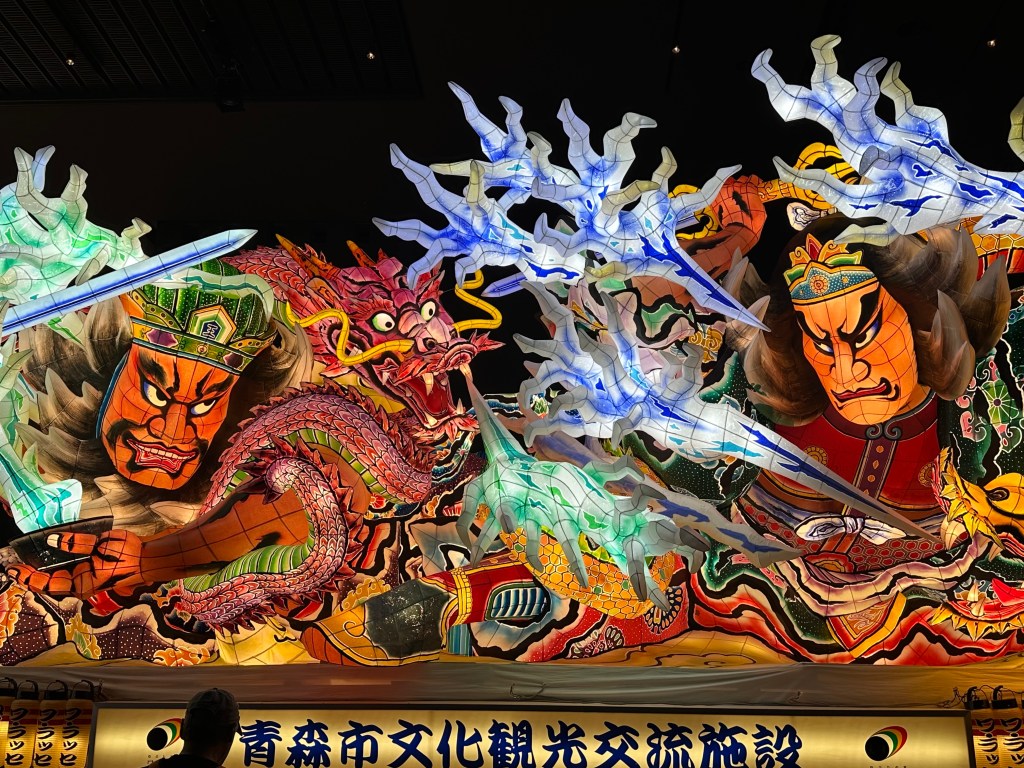
These fearsome figures are two of the Eight Great Dragon Kings, Nanda and Sagara, who control spring water.
This fellow is an evil spirit from Japanese legend whose spirit was eventually put to rest by a shrine graced by a magnificent wisteria.
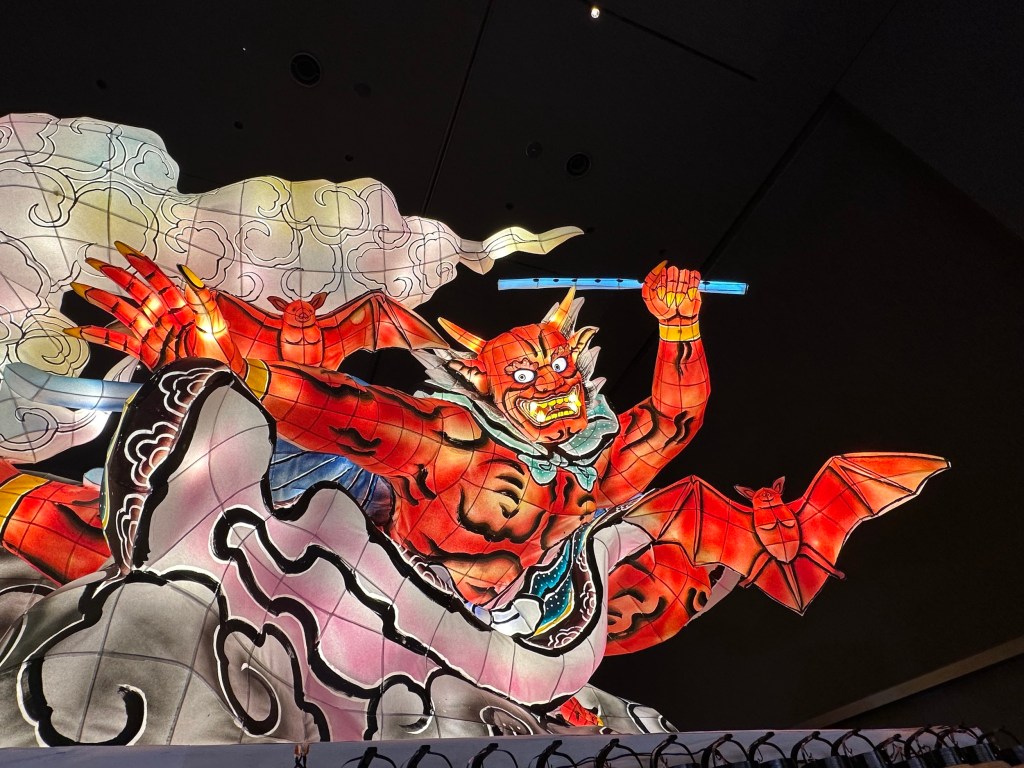
This drama makes us wonder if any of the millions of visitors who attend the nebuta festival every year go home to bad dreams.
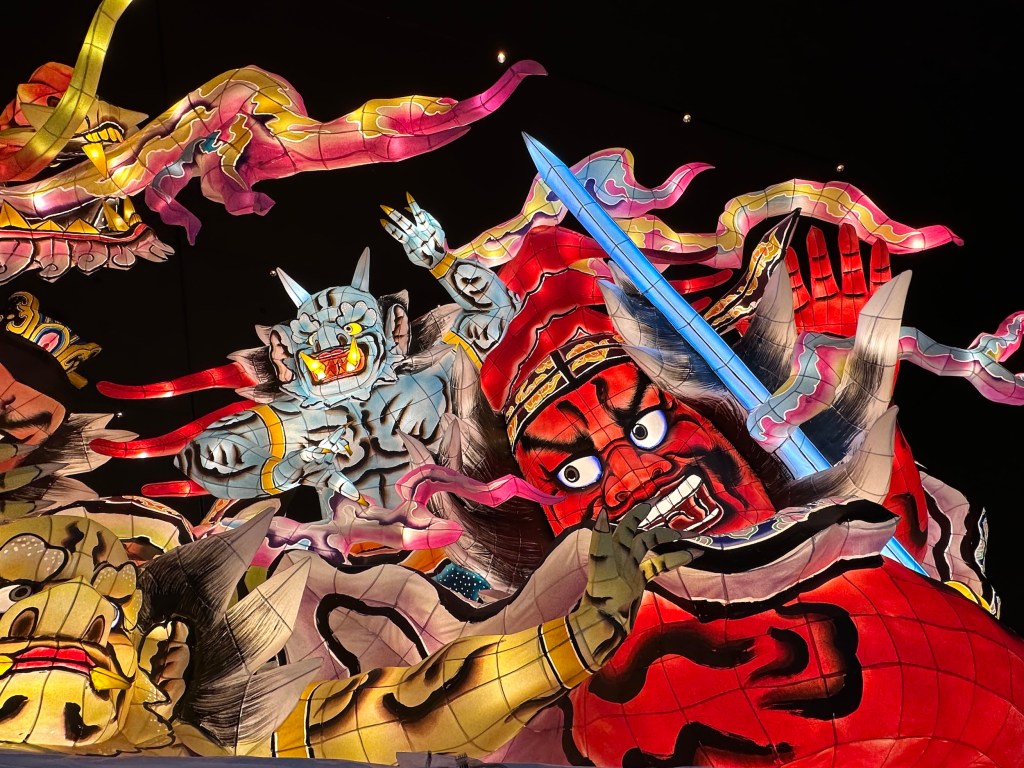
We can hope creations like these lovely musicians serve as antidotes for the ogres and demons.
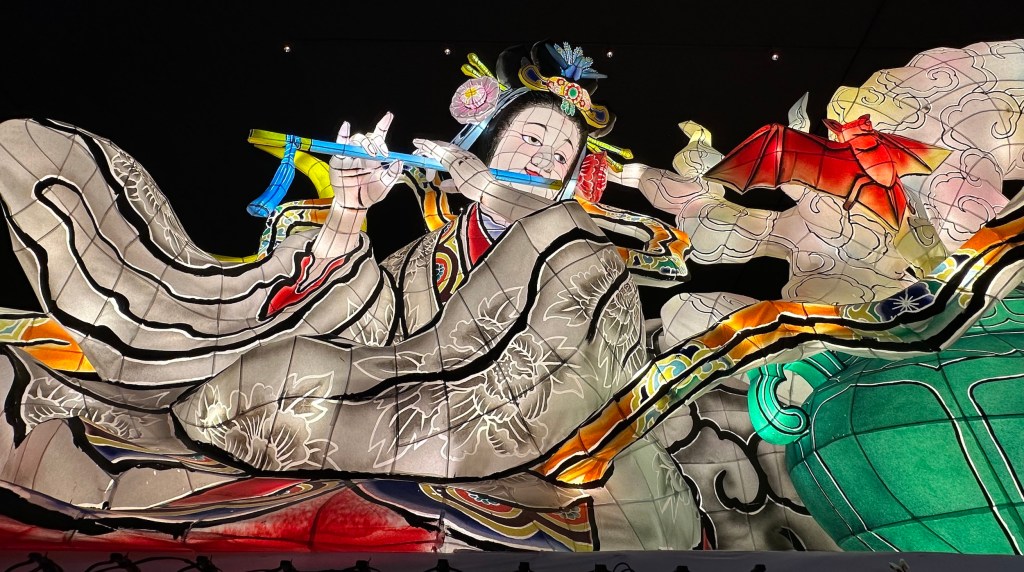

Regardless, the nebutas of Aomori are eye-popping one and all and examples of the unexpected gems cruising around the world has uncovered.
Another Question Answered
Your Partout pair asks, “Have we answered all your questions?”
With less than three weeks left in our world cruise and no more than a handful of Partouts to come, now is the time to ask (or re-ask, if your previous question got lost in the shuffle). Speak now or forever hold your peace! What do inquiring minds still want to know?
Where’s Snowy?
Besides hiding out at the Meiji Jingu shrine in Tokyo?


 Partout with Louis & Doris
What an awe
LikeLike
Will miss the missives…. Must promise to accept my application for your valet on the next trip! When you coming to Washington?
LikeLike